Resources for Immigration Attorneys
Comprehensive resources, guides, and best practices for immigration attorneys working with clients who may benefit from psychological evaluations.
When to Refer Clients for Psychological Evaluations
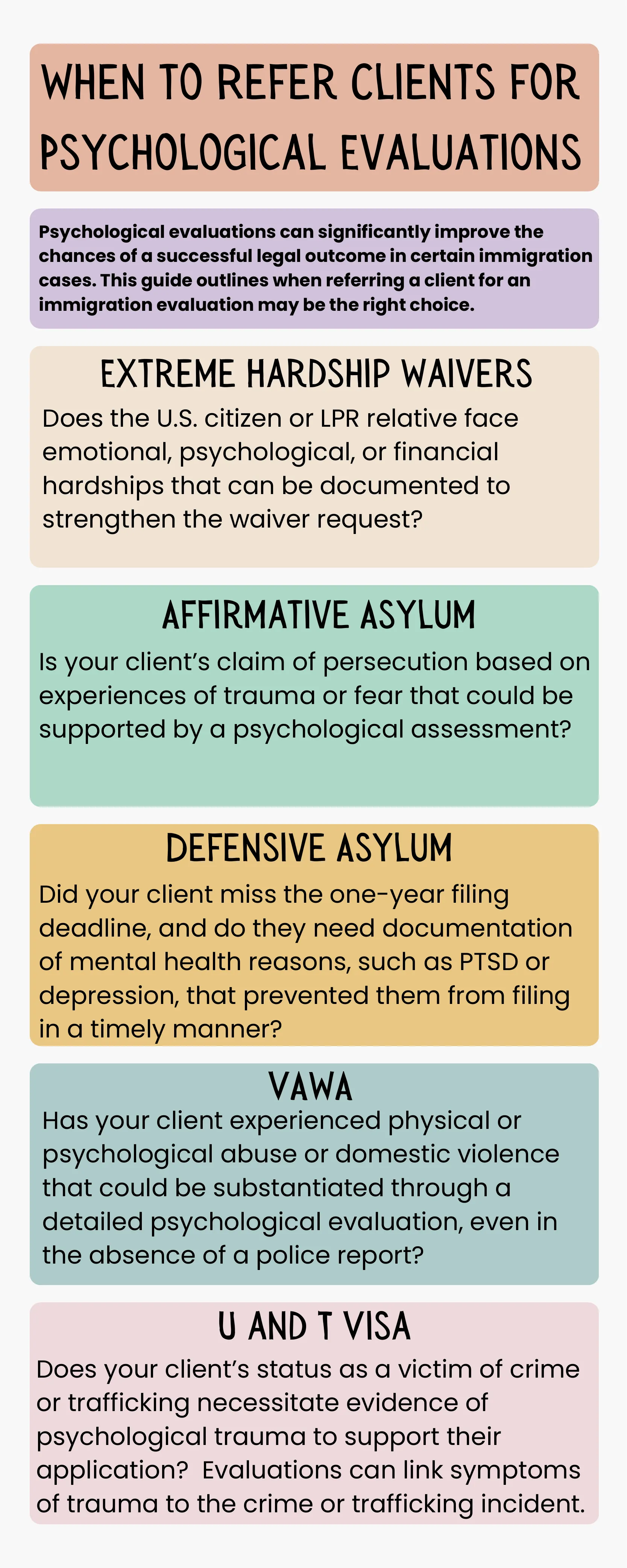
Does the U.S. citizen or LPR relative face emotional, psychological, or financial hardships that can be documented to strengthen the waiver request?
Is your client's claim of persecution based on experiences of trauma or fear that could be supported by a psychological assessment?
Did your client miss the one-year filing deadline, and do they need documentation of mental health reasons, such as PTSD or depression, that prevented them from filing in a timely manner?
Has your client experienced physical or psychological abuse or domestic violence that could be substantiated through a detailed psychological evaluation, even in the absence of a police report?
Does your client's status as a victim of crime or trafficking necessitate evidence of psychological trauma to support their application? Evaluations can link symptoms of trauma to the crime or trafficking incident.
Are there aspects of your client's testimony that lack independent verification and could benefit from professional validation? Have RFEs or similar requests highlighted the need for additional psychological evidence?
Strengthening Credibility
- Consistent Storytelling: Would a professional evaluation help clarify or validate inconsistencies in your client's narrative?
- Emotional Impact: Could the evaluator's findings humanize your client's case and create a more compelling argument for relief?
- Complex Trauma: Does your client's case involve complex trauma, and would an evaluation help establish links between specific traumatic events and current symptoms?
Selecting the Right Evaluator
Immigration Law Experience
Is the evaluator experienced in preparing reports tailored to the requirements of immigration cases? Our evaluations are specifically designed to meet legal standards and provide the evidence needed for immigration proceedings.
Cultural Competence
Does the evaluator have the cultural sensitivity to understand and appropriately assess your client's background? We provide bilingual services and culturally sensitive assessments.
Professional Credentials
Licensed mental health professional with specialized training in trauma-informed care and psychological assessment for immigration cases.
Clear Communication
Comprehensive reports delivered within agreed timelines, with clear communication throughout the process and availability for consultation.
Downloadable Resources
Referral Process
Contact Us
Reach out via phone, email, or contact form to discuss your client's case.
Case Review
We'll review the case details and confirm that an evaluation is appropriate.
Schedule Client
Your client schedules their evaluation sessions directly with us.
Receive Report
Comprehensive report with an executive summary for attorneys.
What Attorneys Say
Immigration attorneys across the country trust our evaluations to strengthen their clients' cases.
"Sandra's reports are an invaluable addition to our immigration filings. She is thorough, knowledgeable, and wants to do everything she can to assist our clients. Sandra is communicative with us, including getting a brief background on the client's case prior to her initial meeting with them and being receptive to edits and amendments in her draft reports. In addition, she develops a trusting and caring rapport with the clients which enhances the quality of the evaluation. We look forward to growing the relationship between Sandra and Benach Collopy as she continues to help our clients with improving their mental health as well as securing status in the United States."
Ava Benach
Partner at Benach Pitney Reilly LLP
AILA Edith Lowenstein Memorial Award Winner
"Sandra is my firm's 'go-to' for immigration-related psychological evaluations. Her reports have been essential in demonstrating our clients' credibility and corroborating the mental impact of their experiences."
Sarah B. Pitney, Esq.
Partner at Benach Pitney Reilly LLP
"I have collaborated with Sandra on multiple cases and can confidently recommend her professionalism and expertise. She approaches every matter with exceptional attention to detail, strong analytical skills, and a genuine commitment to achieving the best possible outcomes."
Ana Gracia
Attorney
"Super detailed psychologist with a kind soul. Sandra is super easy and wonderful to work with. I have had amazing success with immigration cases where she has done evaluations for my clients. She takes her knowledge of the immigration system and caters to every need!"
Bailey Hancock
Immigration Paralegal
Trauma-Informed Lawyering
Understanding trauma and its impact on your clients can improve communication, build trust, and strengthen your legal representation.
Recognize Trauma Responses
Trauma can affect memory, emotional regulation, and communication. Clients may have difficulty recalling details, appear emotionally flat, or become overwhelmed when discussing traumatic events. These are normal trauma responses, not signs of dishonesty.
Create Safe Spaces
Building trust takes time. Allow clients to share their stories at their own pace, validate their experiences, and create an environment where they feel safe and respected. Sometimes the most important details emerge only after trust is established.
Collaborate with Mental Health Professionals
Psychological evaluations can provide crucial context for understanding your client's experiences and behavior. Mental health professionals can help document trauma and explain inconsistencies to support your case.